Commercial facilities have never been under more pressure to deliver consistent, high-standard cleanliness. From large-scale logistics warehouses, busy retail centres, or high-traffic corporate campuses, the demand for reliability and cost efficiency is relentless.
For years, rule-based robotic cleaning systems were considered cutting-edge; today, they're rapidly becoming the bottleneck to efficiency.
The gap between AI-driven cleaning systems and their rule-based predecessors stems from generational technological advancements. Two technologies simply aren’t on the same playing field.
Understanding the difference is critical for any facilities manager or operations leader evaluating the next evolution of their cleaning infrastructure.
What Are Rule-Based Cleaning Systems?
Rule-based robotic cleaners operate on fixed, pre-programmed logic and commands. They follow a defined map, execute a set path, and repeat those instructions on a schedule.
These systems work adequately in spaces that:
- They are tightly controlled and highly predictable.
- Have minimal foot traffic.
- Have predictable and static obstacles.
When the environment changes, a rule-based robot has no mechanism to adapt. It either bumps into the obstacle, stalls, or navigates around the obstruction without awareness that a zone has been missed.
In real commercial environments, changing conditions are often the norm, and there’s little time or opportunity to adjust rules-based systems to manage this.

How AI-Based Systems Change Everything
Using advanced onboard sensors, 3D perception, and machine learning, AI-powered cleaning robots dynamically perceive their environment, identify obstacles in real time, and recalculate optimal cleaning paths as needed.
This is the core distinction to note:
- Rules-based cleaning systems execute instructions.
- AI-based cleaning systems can make decisions.
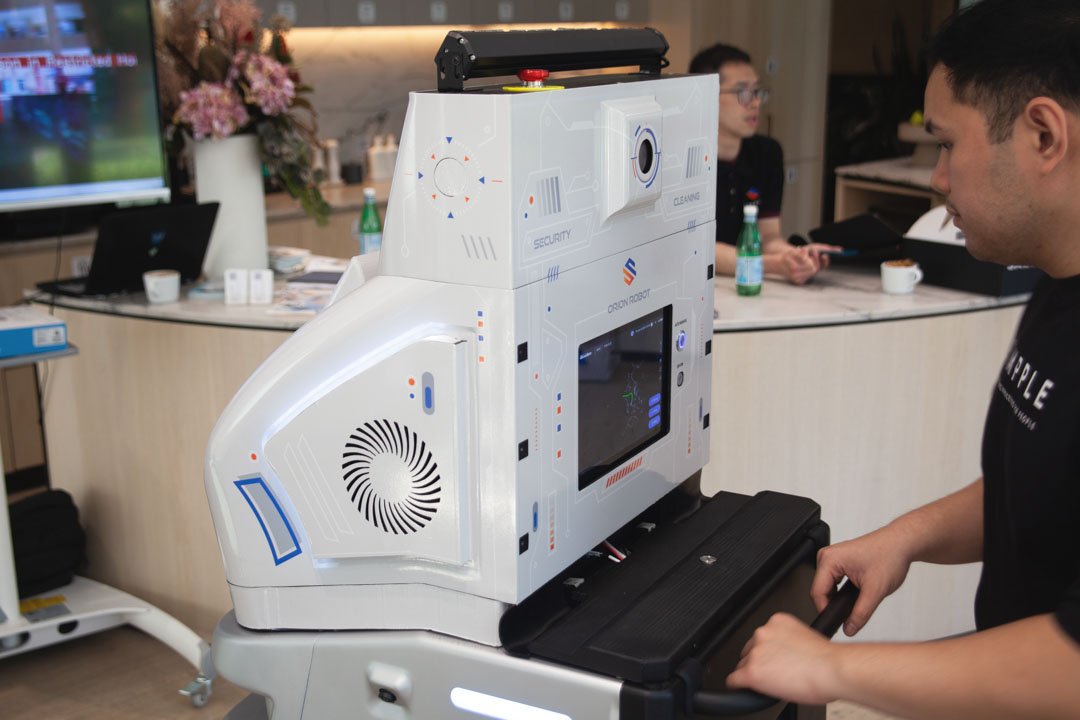
Australian Robot Technology (ART) AI cleaning robots, Tim and Harry, deployed in a commercial space, can:
- Adapt to dynamic environments: The robots use 3D LiDAR and AI-driven obstacle avoidance to navigate safely through even busy environments. High-traffic areas, furniture repositioning, temporary fixtures, and spills are all processed in real time.
- Optimise coverage continuously: Rather than unthinkingly repeating a fixed path, AI-driven systems identify missed zones, adjust for high-traffic areas that require more frequent passes, and prioritise cleaning efforts where it matters most.
- Learn and improve over time: Each deployment makes the system smarter. Navigation becomes more efficient, and cleaning outcomes improve without manual reprogramming every time.
- Operate with autonomy: Docking, charging, task scheduling, and reporting all happen without human intervention, freeing facility staff for higher-value responsibilities.
- Maintain safety: ART robots consistently avoid contact with visitors and adapt their paths to maintain both safety and efficiency.
Should You Add AI Cleaning Technology?
Whether you’re currently using rules-based systems or deciding between the two, there are plenty of considerations that can help aid your decision.
If your space is small, predictable, and low-traffic, a simple rules-based robot could work perfectly for your needs. There’s nothing wrong with a technology that does just what you need it to, every time.
One thing worth noting about rules-based systems compared to AI systems is that they often require hours of setup per site and frequent manual recalibration when layouts change. AI-driven platforms can be fully deployed on site in under an hour, with map editing, task creation, and real-time monitoring all accessible remotely.
Next-generation AI cleaning platforms are also increasingly multi-functional. Integrating CCTV surveillance alongside autonomous cleaning. These systems deliver dual-purpose value by turning a cleaning budget into a security asset.

Transform Your Cleaning Delivery With AI
The commercial cleaning landscape is being redefined by AI-driven cleaning technology, and it's really now a question of how quickly you can get on board.
Australian Robot Technology's commercial cleaning robots are built on industry-leading AI navigation, 3D perception, and fully autonomous operation. Book a live demonstration today and see what intelligent cleaning looks like in your facility.

